
Bottle and Container Handling Robots
Bottles, jars, cups and cans move between machines on almost every packaging line. Robotic handling with integrated vision takes over transfer, loading and unscrambling steps where fixed conveyors and format-specific change parts reach their limit.
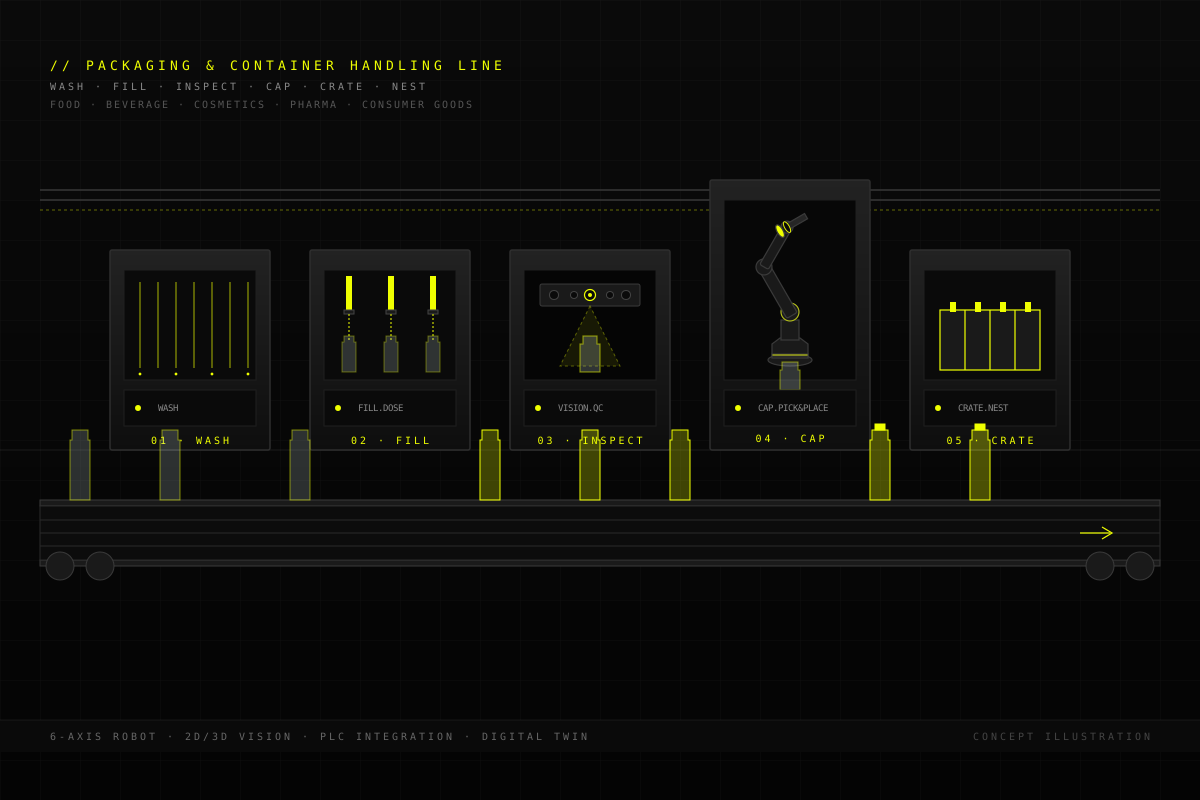
What the task looks like on the shop floor
Beverage, food, cosmetics, pharma and consumer goods lines move containers between washing, filling, capping, labelling, inspection and crating stations. Between those machines, containers are guided by conveyors, starwheels, screws and change parts built for one format. Every new bottle shape, cap or pack size means new tooling, a mechanical changeover and a validation run.
Where the line is not fully connected, operators bridge the gaps: loading empty containers into a filler infeed, unscrambling bottles from bulk, moving trays between machines, or removing rejects. These tasks are repetitive, and their speed and consistency set the pace of the whole line.
Typical situations
- Manual loading of fillers, cappers, labellers or tray loaders
- Format changes that require new change parts and long changeovers
- Bottles and jars arriving in bulk that must be unscrambled and oriented
- Glass and plastic containers that need different gripping strategies
- Wet, slippery or lightweight containers that fall over or jam on conveyors
- Line speeds far above what a single robot can follow pick by pick
When a robotic application makes sense — and when it does not
An honest fit check is the first thing we do. Not every task needs a robot, and not every robot task needs vision.
It usually makes sense when
- Several container formats run on the same line and changeover time matters
- A manual transfer or loading step exists between two machines
- Containers arrive in bulk or unordered and need orientation before the next machine
- Line speed can be matched with multi-pick grippers, buffering or several robots in parallel
- Container position or orientation varies and integrated vision can locate each item
- Glass or fragile containers need controlled gripping instead of mechanical guides
It usually does not make sense (yet) when
- A single, stable format runs at very high speed and a starwheel or timing screw already does the job reliably
- Line speed exceeds what buffering and multi-pick can compensate, with no space for accumulation
- Containers are unstable, deformable or so wet that no gripper can hold them consistently
- Washdown or aseptic requirements cannot be met by the available robot and gripper options
- Upstream and downstream machines cannot exchange a handshake and the robot would run blind
What we typically use
- 6-axis industrial robots
Payload and reach sized for single or multi-pick heads; delta or SCARA robots when speed matters more than reach
- Integrated 2D/3D vision
Locating containers on conveyors, in trays or in bulk; reading orientation and detecting fallen bottles
- Container grippers
Neck, body or cap gripping; vacuum, mechanical or compliant fingers selected for glass, PET, HDPE or metal
- Multi-pick and buffering
Multi-position heads, accumulation tables and conveyor tracking to match line speed with robot cycle time
- Digital twin validation
Cycle time, reach and collision checks against the real line layout and target line speed
- PLC / robot integration
Handshake with fillers, cappers, labellers and conveyors; line-stop, reject and restart logic
From task to validated robotic application
We start from the production task, not from the robot. Each step reduces technical risk before the next investment.
- Step 01
Line and format assessment
We start from your containers, line layout, speeds and format list: where containers come from, where they must go, and which changeovers cost the most time.
- Step 02
Gripper and vision tests
We test gripping and detection on your real containers — empty and full, dry and wet, glass and plastic — before selecting a robot or camera.
- Step 03
Digital twin and pilot
We check cycle time, reach and the buffering strategy in simulation against your line speed, then build a small pilot cell with the real gripper and containers.
- Step 04
Integration and deployment
We connect the application to the line PLC and the surrounding machines, together with mechanical, electrical and safety partners, and support commissioning on site.
Related services: Robot Application Assessment, Digital Twin Validation, Robotic Pilot Cell, PLC / Robot Integration.
Often combined with
- Packaging HandlingRobotic handling of packaging components, containers, bottles, lids, trays, cartons and end-of-line products.
- Vision-Guided Pick & PlaceRobot applications where part position, orientation or format changes and vision is required before motion.
- PalletizingRobotic palletizing and depalletizing concepts for production and end-of-line automation.
- PLC / Robot IntegrationPLC-connected robot applications, machine handshake, safety states, I/O mapping and industrial software integration.
Have a container transfer or loading step that still depends on operators?
Send a short video of the line section, the container formats and the target line speed. We can tell you whether robotic handling is realistic for that step and what the first technical check would be.